

The Importance of Brand Architecture in Building a Unified Brand Identity
category /
Branding
date published /
03.11.25
read time /
3min
What Is Brand Architecture?
If you thought all your company needed to build identity was a brand, well no. Much like the Hobbits have second breakfast and elevensies to complement Breakfast, an expanding brand often gets accompanied by a portfolio of sub-brands, products and other services that relate both to each other and the parent company. Brand architecture is how we manage the organizational structure between all these properties to maintain a coherent message and experience towards customers.
The Importance of a Brand Architecture Strategy
Marketing strategy
Unsurprisingly, brand architecture shapes your company’s approach to marketing and even resource allocation. A strong parent brand can help “lift” the smaller sub-brands through a coherent marketing strategy, while a parent company with many different independently marketed sub-brands would go about marketing these products differently, since some of these sub-brands can often develop identities which contradict and even conflict with the values associated with other sibling-rands.
So from a digital standpoint, this means making decisions about whether there should be a single overreaching brand website for the entire portfolio, or many standalone web presences and the marketing scramble that would inevitably follow. This is where strategic brand experience planning becomes invaluable—helping you coordinate how customers interact with your brands across every touchpoint.
Trust
Trust plays an understated yet massive role in managing a single brand…when managing multiple brands, the impact of trust on customer retention is exponentially important. Successful brand architecture models set proper expectations from customers. When your audience figures out how the sub-brands they identify with relate to the larger parent brand that sense of trust must flow in both directions. Poor brand architecture strategies erode trust when they do not convey to customers that a product is backed by a reputable company.
Loyalty
Brand architecture finds meaning when it resonates with customers, and spreads. Branded houses can often extend the reach of the “halo effect” produced by the parent brand over other products. Customers will trust a new brand on the market if they already trust the parent brand and will keep coming back to try out new products, creating a bit of an ecosystem.
Brand equity
Determining how and where value concentrates is key to brand architecture development. A house brand distributes equity across its multiple properties. So do it well!
Pro tip: Brand architecture directly impacts asset efficiency, so a branded house empowers you to repurpose content, design components and deploy scalable CMS for multiple product lines at once.
Cross Selling
Brand architecture development can be perfectly poised for, or a hindrance to cross-selling opportunities, depending on how you set it up. Again, a branded house can transform cross-selling into a seamless experience across brands since you can suggest products from across your range to customers visiting any one of your websites. On the other hand, that requires more sophisticated data strategies and careful UX design.
Pro tip: Hybrid architectures. That’s it. Do that.
3 Different Types of Brand Architecture
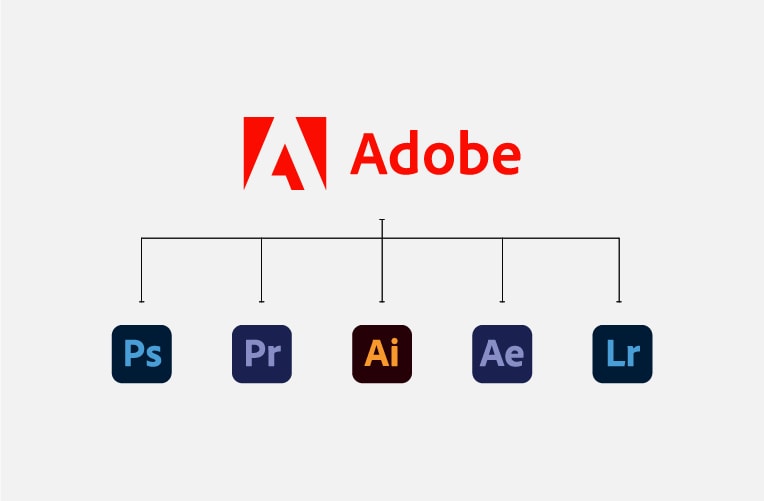
The Branded House
Picture this: one powerful parent brand that owns the entire show. Every product, service, and sub-brand lives under the same roof, leveraging the same identity, messaging, and visual language. That's a branded house. Virgin does this beautifully—whether you're booking a flight or signing up for mobile service, you're trusting the Virgin name.
Here's why this works: your parent brand becomes a trust machine. Launch a new product? Customers who already know and love your brand will give it a shot because they already know what to expect. That halo effect is powerful. Plus, from an operational standpoint, you're not reinventing the wheel every time. Repurpose content, scale your design systems, deploy your CMS across multiple product lines at once. Efficiency at its finest.
The catch? You're putting all your eggs in one basket. If your parent brand takes a hit, everything feels it. And if you're trying to serve wildly different markets—say, luxury goods and budget products—forcing them under one brand can feel forced and dilute what makes each special.
House of Brands
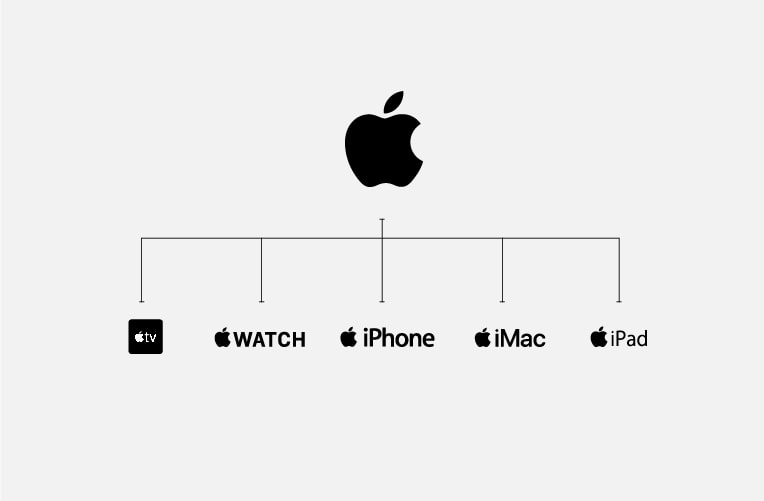
Now flip the script. A house of brands is when you've got multiple independent brands, each with its own distinct identity and marketing strategy, all living under one corporate umbrella that most customers never even see. Procter & Gamble does this—Tide, Gillette, and Pampers all operate as distinct brands with their own positioning and personality.
Why go this route? Flexibility and protection. Each brand gets to be exactly what it needs to be for its target audience. No compromises, no forced fit. And if one brand stumbles? The others are safe. You're also free to test different approaches, different messaging, different visual languages across your portfolio.
The trade-off is complexity and cost. You're essentially running multiple marketing operations. More campaigns, more brand guidelines, more design systems to maintain. And here's the real miss: customers might love multiple brands in your portfolio without ever knowing they're connected, which means you're leaving money on the table when it comes to cross-selling and ecosystem opportunities.
Hybrid Brand Architecture
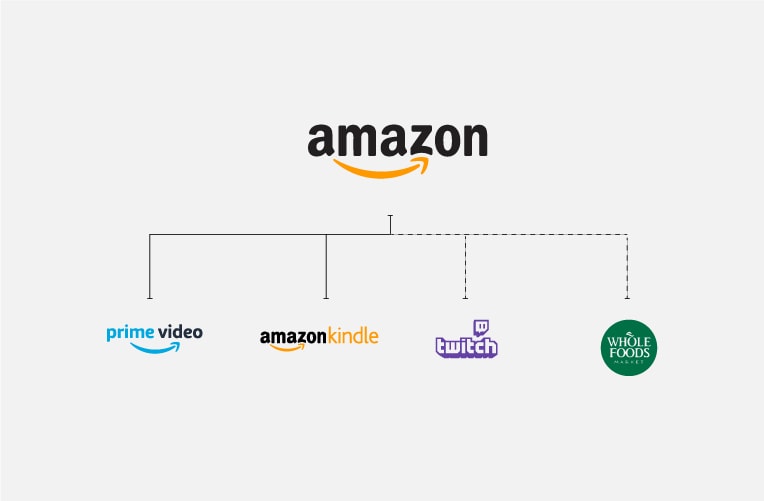
This is where most smart organizations end up. You get the best of both worlds—a strong parent brand that gives credibility and connection, while letting sub-brands develop their own distinct identities where it matters. Google does this. So does Amazon. They're not pure branded houses or pure houses of brands. They're hybrids.You might use endorsed branding, where the sub-brand shines but the parent brand is there for that credibility boost. Or you create sub-brand clusters that all connect back to the parent.
The point is: you're being strategic about when and how you leverage the parent brand. Hybrid architectures give you efficiency without sacrificing flexibility. You maintain core brand systems at the parent level—your design components, your content frameworks, your scalable infrastructure—while creating targeted campaigns and specific positioning for sub-brands where they need it. To make these sub-brands even more memorable, consider integrating brand mascots and characters — they’re a fun, human way to bring each brand personality to life and strengthen customer connection. And cross-selling becomes seamless because customers can see how products across your range connect, all while knowing they're backed by a reputable parent.The complexity here is governance. You need clear decision frameworks so teams understand when to lead with the parent brand, when to lead with the sub-brand, and how to balance both. But that's worth solving because, frankly, hybrid architectures deliver. That's why we keep coming back to them.
Pro tip: Hybrid architectures. Seriously. If you're managing growth and portfolio diversity, this is your answer.
Types of Brand Architecture Strategies
- 1)
Mono-Brand Strategies
That’s when you employ a single master brand identity across all its products, services, and sub-brands
- 1)
Multi-Brand Strategies
The opposite of the above: each sub-brand has its own marketing strategy.
- 1)
Sub-Branding
Has its own distinct identity but clearly tethered to the parent brand.
- 1)
Endorsed Branding
This is a hybrid brand architecture approach where the sub-brand of the product will have its own well developed identity while sharing real estate with the parent brand to give it that extra boost of credibility.
Guide to Create Brand Architecture Strategy
1. Analyze your current brand position Audit all existing brands, products, and digital properties to understand what equity you've already built and where confusion or overlap exists. This audit is the foundation of your brand development process moving forward.
2. Conduct strategic research Study your target audiences, competitive landscape, and market opportunities to determine which architecture model will best support your business goals and customer needs.
3. Establish your brand hierarchy Define the relationships between parent, sub-brands, and products by choosing your architecture model (mono-brand, endorsed, house of brands) and mapping out how brands connect or remain independent.
Pro Tip: Document decision criteria for future brand additions - create a framework that helps you quickly determine whether new products should become sub-brands, product lines, or entirely separate brands based on target audience, strategic value, and market positioning.
4. Design your visual and verbal identity Create design systems, naming conventions, and messaging frameworks that reflect your hierarchy, ensuring each brand has appropriate visual distinction or consistency based on its architectural role. A strong brand identity framework is critical at this stage.
5. Implement your brand architecture strategy Execute the rebrand or restructure across all touchpoints - websites, marketing materials, product packaging, and customer communications - with a phased rollout plan that minimizes disruption.
6. Maintain consistency with brand guidelines Develop comprehensive brand books and governance processes that define how each brand in your architecture should be expressed, ensuring stakeholders understand the rules for logos, messaging, and brand relationships across all channels.
Pro Tip: Build a brand architecture decision tree into your guidelines - a simple flowchart that helps teams determine which brand to lead with in different scenarios, how to handle co-branding situations, and when endorsements should be prominent versus subtle. This prevents inconsistent application as your organization scales.
by
Anginé Pramzian
read next

subscribe to newsletter