

Understanding the Key Differences Between Branding and Marketing
category /
Branding
date published /
25.02.26
read time /
7min
Why Your Brand and Marketing Strategy Aren't the Same (And Why That Matters)
Time and time again, we get calls from marketing managers complaining that after expending large budgets on marketing campaigns and seeing initial successes, sales and engagement begin to plateau. The managers say they've tried everything: new marketing channels, tweaking their messaging to reflect their sales data, beefing up their ad budgets, but nothing sticks. In our experience, more often than not, that’s not actually a marketing problem, it’s a branding problem.
Our clients who do understand this subtle, but critical branding and marketing difference tend to grow faster and more sustainably than those which don’t. Now, while branding and marketing are distinct features, they aren’t totally unrelated. They’re basically two sides of the same coin and each requires its own strategic investment. Let's break down how these differences play out in the real world with your brand’s audience and how they can work together by sharing insights from our own brand experience projects along the way.
Building Your Foundation: What Branding and Marketing Actually Are
The Soul of Your Business: What Is Branding?
Branding as basically a soul-searching experience. It’s the journey of figuring out who you are as a company. What do you stand for? What are your values? Everything else: logo design, brand colours, brand book, marketing strategies and so on, stem from this one realisation. We’re talking about your purpose, your positioning. It’s about the voice with which you talk to people just as much as it’s the feeling your audience gets when interacting with you. Brand development is a long-term project, since it involves building trust with people who will connect with your message on an emotional level over time.
One way to look at it is that marketing could convince potential customers to try your product once, but branding is what makes them come back, and also telling all their friends about it. In other words, building trust in your brand is what creates loyal repeat customers and evangelists for your company. That’s the foundation that the rest sits upon.
One example that comes to mind from our own experience is a brand which literally had to become synonymous with trust. SafeYou is a startup on a mission to revolutionise women’s physical safety. That’s why in this case, the real challenge, beyond just building a beautiful and functional app, was to craft a brand identity that immediately evokes security, trust and community for vulnerable users. Every design choice, from visual language to the tone was designed to reinforce the concept that users are always supported and protected. That’s how branding does its job.
The Voice of Your Business: What Is Marketing?
So if branding is about discovering who you are, then marketing is about telling the rest of the world. Marketing is the act of promoting your products or services to the people who are most likely to buy them. You’re probably already familiar with the more traditional marketing channels like content marketing, digital ads, PR campaigns, email campaigns, events, social media and so on. Unlike branding, marketing tends to operate on a much shorter and more defined timeline. You run campaigns, measure results, adjust tactics based on the data, rinse and repeat. The objective is quite clear: generate awareness, drive leads, and finally, bring revenue to the company in the form of boosted sales. Marketing is more blatantly transactional by nature, which, in this case, isn’t a bad thing. It’s how you pay to keep the lights on after all.
But the point we’re trying to drive home here is that marketing speaks for your brand. It takes the identity, values and positioning which you previously established as part of your brand and translates them into concise messages to reach specific audiences with a direct goal: selling your brand. Thus, without a solid brand behind it, well-crafted marketing will still generate some short-term wins, but without the two of them working hand-in-hand you might not build the momentum you need to create a lasting impact.
The Critical Distinctions: Where Branding and Marketing Diverge
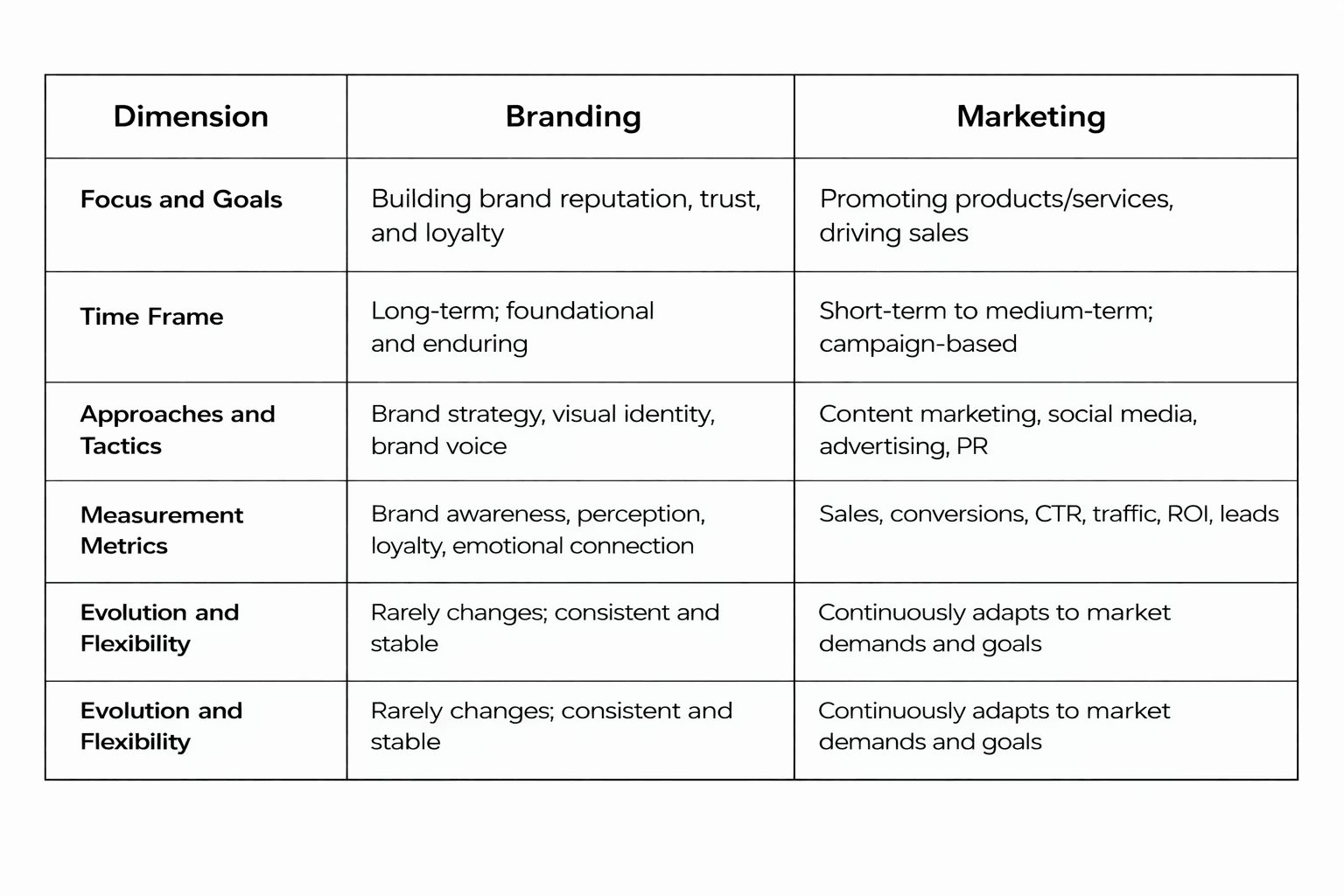
Understanding how branding and marketing diverge, as well as where they cooperate is critical to figuring out where to invest time and budget and uncovering why certain efforts may not pay off just how you’d hoped.
We’ve said this in the previous section, but it's worth reiterating here: branding is the slow, steady work of building a message that people want to believe in, while marketing is the faster, more tactical work of getting a product (or service) in front of people at the right time for purchase. One builds the foundation, while the other fills the pipeline. You need both working in tandem. Yet confusing one for the other is where a lot of businesses drop the ball.
The Perfect Partnership: How Branding and Marketing Work Together
X10 Agency - How powerful visual identity and messaging positioned them as the go-to partner for Web3 success, attracting visionary startups and investors
But when you dial it in just right and get the two to work in tandem, here’s where things get interesting. Once you get branding and marketing to work as a single, cohesive system, your brand outlines what you stand for, how you sound, what emotions you evoke, while your marketing strategy spreads that message across your touchpoints. Aligned, these two efforts just come off as intentional, even natural, to your customers. Your ads reinforce what your website says. Your social media sounds the same as your company emails. Customers start to recognise your voice as if you were a person, even before they recognise your logo.
That’s also why it's important to avoid any disconnects between the two. Say your brand positioning signals “premium and trustworthy” but your marketing pushes a lot of discount-heavy ads with cheap or obviously Ai-slop stock photos or sloppy languages, you end up causing cognitive dissonance among your clients. So no surprise if you see a drop in conversions. For the same reason, consistency is a must.
The agency X10, another one from our portfolio, focused on Web3 services, but their main challenge was positioning themselves as a go-to partner for startups and investors in a notoriously crowded, hype-filled space. The bold visual identity which we developed with them had to be combined with sharp messaging that consistently communicated credibility and vision across the board. We can do the same for you.
Your Strategic Roadmap: 5 Steps to Building Both Right
Anyway, here’s a little roadmap of how we put this all into practice:
Step 1: Define brand purpose and values: Start with the why. What does your company actually stand for beyond making money?
Step 2: Identify target audience and conduct research: Dig into your audience…their needs, frustrations, behaviors, and the alternatives they're considering. Real research beats assumptions every time
Step 3: Develop brand identity and story: Everything should ladder back to the purpose and values you defined in step one.
Step 4: Set marketing objectives and choose channels: figure out what you're trying to achieve with your marketing and where your audience actually spends their time.
Step 5: Implement, monitor, and optimise: The brands that win are the ones that pay attention to feedback and aren't afraid to tweak things based on real-world results.
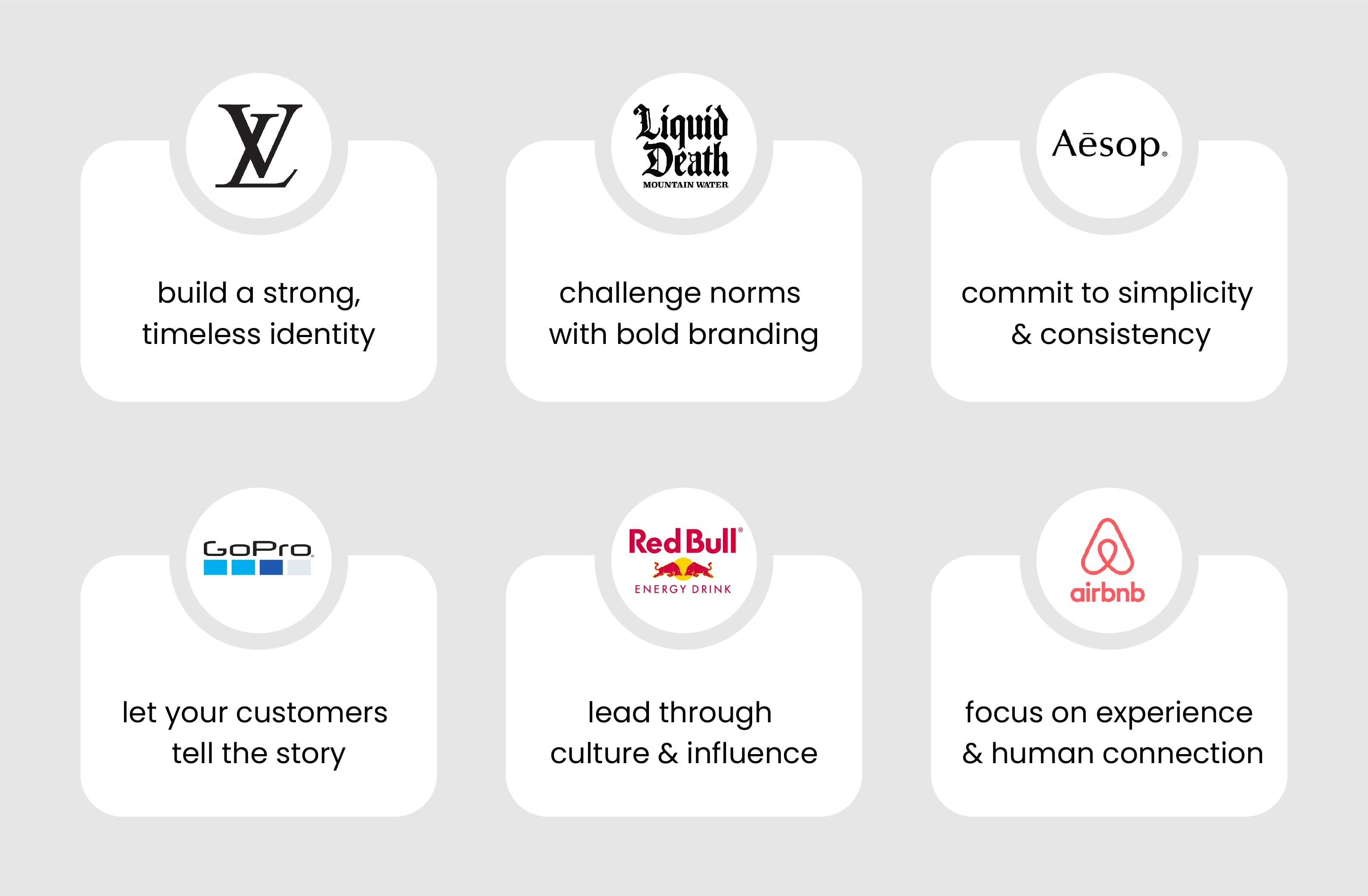
Learning from the Masters: Iconic Brand Strategy Examples
Some brands have nailed their branding and marketing strategies, showing how understanding the difference drives long-term success:
Louis Vuitton: Consistency is king
Since 1854, Louis Vuitton has stayed true to its identity. The iconic monogram canvas, introduced in 1896, remains a symbol of luxury and sophistication. Their lesson: consistency builds recognition, and recognition builds trust. Expanding into fashion and accessories didn’t change the core brand—it reinforced it. Strong foundations make trends follow you, not the other way around.
Liquid Death: Bold and rebellious
Liquid Death sells water with heavy-metal branding—skulls, gothic typography, and slogans like “Murder Your Thirst.” In a serene wellness market, they went full rebellion and won. By understanding their audience—millennials and Gen Z craving authenticity—they leveraged humor, irony, and internet culture. Takeaway: sometimes zigging when everyone else zags pays off. Be bold, different, and authentic.
Aesop: Minimalism with purpose
Aesop’s amber bottles, clean typography, and apothecary aesthetic communicate quality and thoughtfulness without saying a word. Every design choice aligns with brand values, proving that simplicity can be strategic. Less is more when executed intentionally.
Marketing Excellence in Action
GoPro: Customers as content creators
GoPro turned users into their marketing team. Through the GoPro Awards, fans submit footage for prizes and recognition. The result: authentic, aspirational content, cost-effective marketing, and a vibrant community. Marketing amplifies the brand while staying true to it.
Red Bull: Authentic influencer partnerships
Red Bull doesn’t just sponsor athletes—they cultivate icons. From Stratos to Formula 1 and extreme sports events, every activation aligns with the brand promise: energy, ambition, and pushing limits. Marketing and branding become inseparable when executed authentically.
Airbnb: Experiences over products
Airbnb sells belonging, not rooms. From Van Gogh-inspired stays to Online Experiences, every campaign reinforces the promise of transformation and adventure. Marketing amplifies the brand through culturally relevant, sharable, and emotionally engaging experiences.
Pitfalls to Avoid: Common Mistakes That Derail Branding and Marketing
We've seen a lot of businesses stumble in the same ways when it comes to branding and marketing. Here are the most common mistakes, and why they hurt more than people realise.
Confusing the two disciplines This is the big one. When companies treat branding and marketing as interchangeable, they end up doing neither well.
Marketing before branding is established It's tempting to jump straight into campaigns, especially when there's pressure to generate revenue.
Inconsistent brand application Your website says one thing, your Instagram says another, and your sales team is off doing their own thing entirely.
Frequent brand identity changes Some companies get restless and rebrand every couple of years. This kills recognition. Strong brands are built through repetition and consistency, not constant reinvention.
Over-focusing on short-term gains When all your energy goes into this quarter's numbers, you neglect the longer-term brand building that would make next year's numbers easier to hit.
The Path Forward: Your Brand's Next Chapter
So, with the understanding in mind that branding and marketing are distinct concepts, let's keep in mind that confusing them ends up hurting both your brand and your marketing bottom line. Aligning them, however, makes the difference between sales flatlining and sustained growth powered by customer engagement with the brand. At Concept Studio, we approach brand marketing as a connected system, not a series of one-off projects. Our work integrates brand strategy with experience design.
If you're feeling like your current branding and marketing efforts aren't quite clicking, or if you're starting something new and want to build on a solid foundation from day one, we'd love to talk. Whether you need help defining your brand from scratch or want to bring more strategic thinking to your existing marketing, we're here for it.
by
Anginé Pramzian
read next

subscribe to newsletter